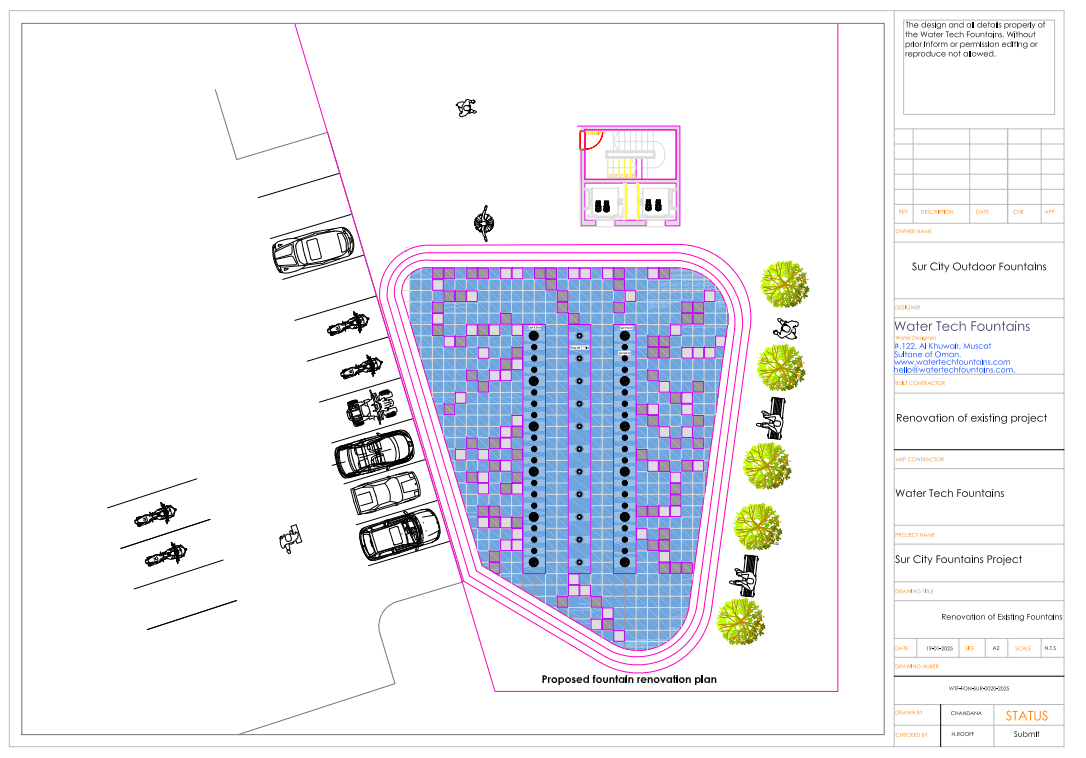
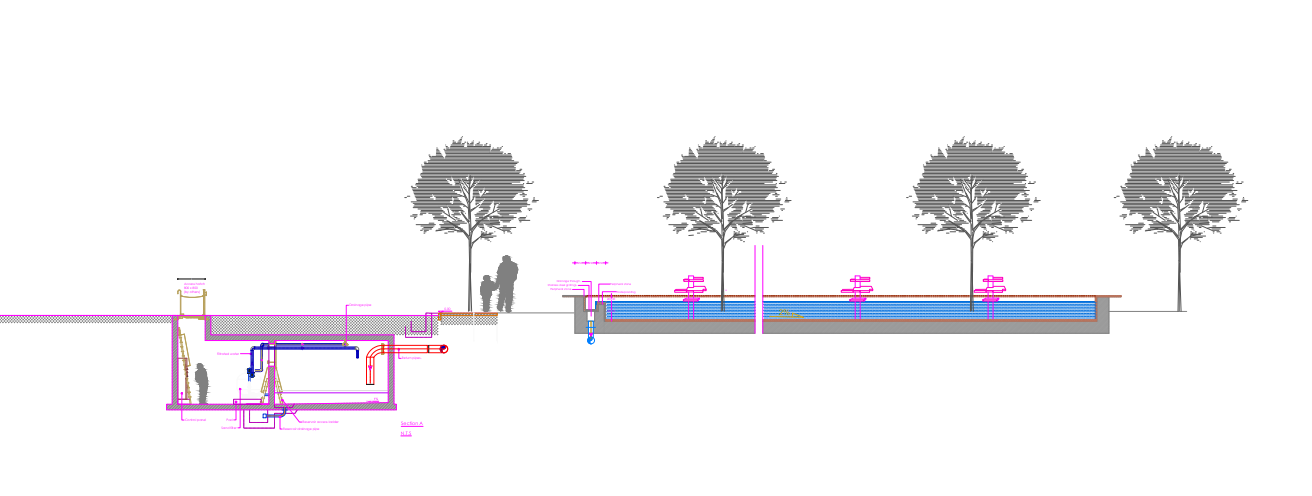
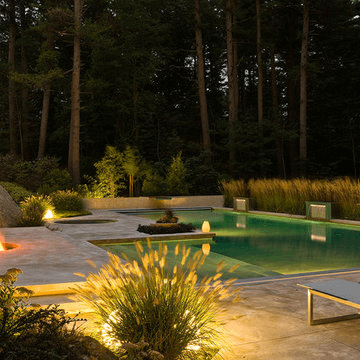
How to Incorporate Traditional Omani Elements in Fountain Design. Merging Tradition, Climate, and Technical Precision. Architectural fountains are more than decorative water features—they embody cultural expression, environmental responsiveness, and engineering excellence. In Oman, where climatic extremes and heritage aesthetics intersect, fountain design presents both unique challenges and rewarding opportunities. This article explores the essential principles, regional considerations, and best practices for designing high-performance architectural fountains in Oman.

Cultural Context and Design Philosophy
Oman’s built environment is deeply influenced by natural geometry, vernacular architecture, and the desert landscape. Successful fountain design in this context should respond to:
Regional Aesthetics: Use of traditional motifs, geometric patterns, and materials such as stone, marble, and ceramics that resonate with local architectural language.
Symbolic Water Use: Water is historically symbolic in Arabian culture—representing life, purity, and hospitality. Integrating water elements in plazas, courtyards, and entrance features reinforces cultural narratives.
Spatial Integration: Designing fountains that complement adjacent built forms (mosques, souks, hotels, parks) without appearing as afterthoughts.
Design Tip: Collaborate early with architects and landscape designers to ensure the fountain’s scale, rhythm, and materials align with the broader architectural intent.
Climatic and Environmental Factors
Oman’s hot and arid climate has major implications for fountain design:
A. Evaporation and Water Conservation
High daytime temperatures increase evaporation rates. To mitigate loss.
Use deep basins rather than shallow features.
Incorporate covers or shade structures where feasible.
Add auto-refill sensors tied to water management systems to maintain levels without waste.

Water Source and Quality
Given scarcity concerns:
1. Prioritize recycled water (treated greywater or harvested rainwater).
2. Install filtration systems capable of handling salinity and particulate load common in coastal regions.
3. Monitor pH and hardness to prevent scale formation on surfaces and plumbing.
Wind and Spray Control
Coastal and desert winds can cause splash-out:
- Strategic placement of windbreaks (low walls, planting).
- Jet design that produces coherent, vertical patterns rather than fine sprays.
- Use of closed recirculation systems to reduce loss.

Mechanical, Electrical, and Plumbing (MEP) Design Essentials
Robust MEP integration is critical for long-term reliability and performance: Hydraulic Systems
- Pump Selection: Choose high-efficiency pumps scaled for the flow and head requirements of the feature.
- Pipe Sizing: Use properly sized piping to minimize friction loss and noise, especially for long runs.
- Valving and Control: Include isolation valves, check valves, and programmable logic controllers (PLC) for dynamic control.


Case Examples in Oman
Although specifics vary from project to project, certain design patterns have proven effective in Omani contexts:
- Plaza Fountains: Low jets with adjustable lighting for evening activation.
- Hotel & Resort Features: Large reflecting pools with cascading water walls.
- Civic Landmarks: Iconic jet sculptures with programmable choreography.
Design Insight: Projects that succeed most consistently are those where architectural intent, environmental responsiveness, and MEP precision were aligned from concept through commissioning.